 The Daily
Fix Early Extension
Disclosure: Some links on this page are affiliate links. If you buy through them we may earn a commission at no extra cost to you. As an Amazon Associate I earn from qualifying purchases. Learn more.
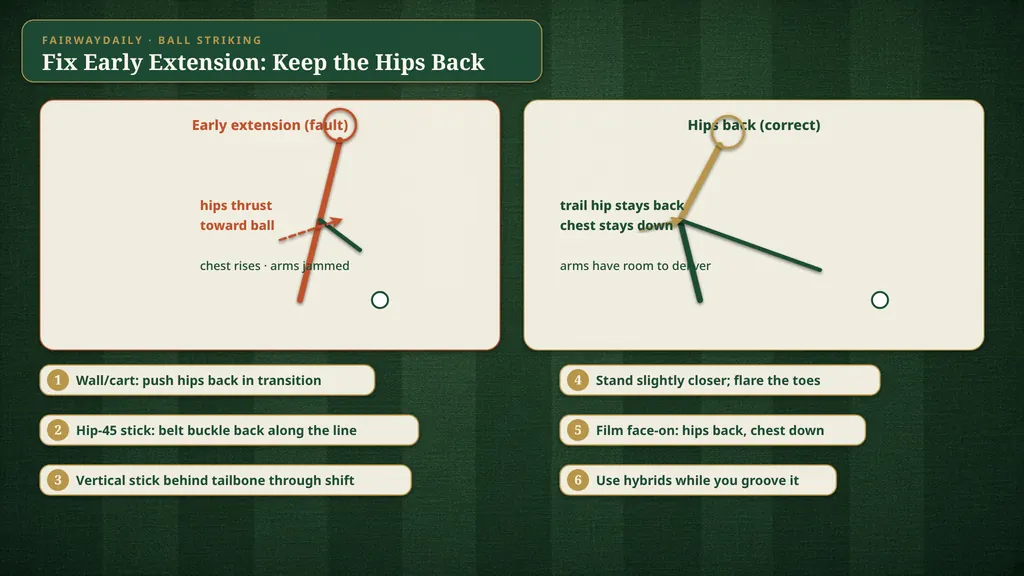
Early extension is when your pelvis thrusts toward the ball in the downswing and your chest rises. That crowds the arms, stalls rotation and leaves you flipping with the hands. The usual result is a two-way miss: pulls and blocks, plus thin and fat contact.
🛒 Gear that helps with this: Alignment Sticks (2-pack) — The cheapest, most useful practice tool in golf: check aim, ball position and gate drills.
How to do it
1. Know the look. At impact your belt buckle has moved closer to the ball than it was at address, and you’ve lost the hip hinge you set at setup.
2. Create space instead. Great ball-strikers keep the trail hip back longer and feel the chest stay down while the lower body shifts and then rotates.
3. Wall or cart drill. Put your backside against a wall, a chair or a push cart. Make slow swings and push that object back in transition. You cannot thrust forward if you are busy pushing something behind you.
4. Hip-45 drill. Lay an alignment stick on the ground between your feet at about 45 degrees (trail toe to lead heel). In transition, shift pressure into the lead toe and feel your belt buckle push back along that line so the trail hip stays clear.
🛒 Many golfers practice this with SKLZ Gold Flex Swing Trainer — A weighted, flexible shaft that punishes a rushed transition and builds smooth tempo.
5. Stick-behind-the-hips. Plant a stick vertically behind your tailbone at address. Keep the trail glute against it going back, and keep your tailbone on the stick as you shift into the lead side. Through impact the lead glute moves behind the stick as you post up.
6. Setup help. Stand a touch closer to the ball and flare the toes slightly so the hips can turn without thrusting. Use hybrids while you learn; they forgive a less-perfect low point.
Film yourself face-on. When your hips stay back and your chest stays down through the mid-downswing, the arms have room and contact gets much more solid.
Top picks for this tip
- 1
Alignment Sticks (2-pack)
Training Aids
The cheapest, most useful practice tool in golf: check aim, ball position and gate drills.
- 2
SKLZ Gold Flex Swing Trainer
Training Aids
A weighted, flexible shaft that punishes a rushed transition and builds smooth tempo.
- 3
Titleist Players 4 Stand Bag
Bags
A lightweight carry bag with a comfortable double strap for walking nine.
Watch it
Titleist Tips | Your Cure for Early Extension — Titleist
Sources & further reading
- Early extension kills your consistency — here’s how to fix it · GOLF.com
Top 100 Teacher Jonathan Yarwood: early extension is the pelvis thrusting toward the ball; push a cart or wall back with your hips in transition. - Do you struggle with early extension? This drill can help · GOLF.com
TPI co-founder Dave Phillips’ Hip 45 drill: shift into the lead toe and push the belt buckle back at 45 degrees to keep the trail hip clear. - Early Extension Swing Fault · Titleist
Dave Phillips: keep the tailbone against a vertical alignment stick through transition so the pelvis stays back and the arms have room.
FAQ
What is the "Fix Early Extension" golf tip about?
Early extension is when your pelvis thrusts toward the ball in the downswing and your chest rises. That crowds the arms, stalls rotation and leaves you flipping with the hands. The usual result is a two-way miss: pulls and blocks, plus thin and fat contact.
How do I put it into practice?
Know the look. At impact your belt buckle has moved closer to the ball than it was at address, and you’ve lost the hip hinge you set at setup.
What’s the key takeaway?
Film yourself face-on. When your hips stay back and your chest stays down through the mid-downswing, the arms have room and contact gets much more solid.
Ready to practice this? Our top pick for this tip is the Alignment Sticks (2-pack).
