 The Daily
Flagstick In or Out? Let Your Speed Decide
Disclosure: Some links on this page are affiliate links. If you buy through them we may earn a commission at no extra cost to you. As an Amazon Associate I earn from qualifying purchases. Learn more.
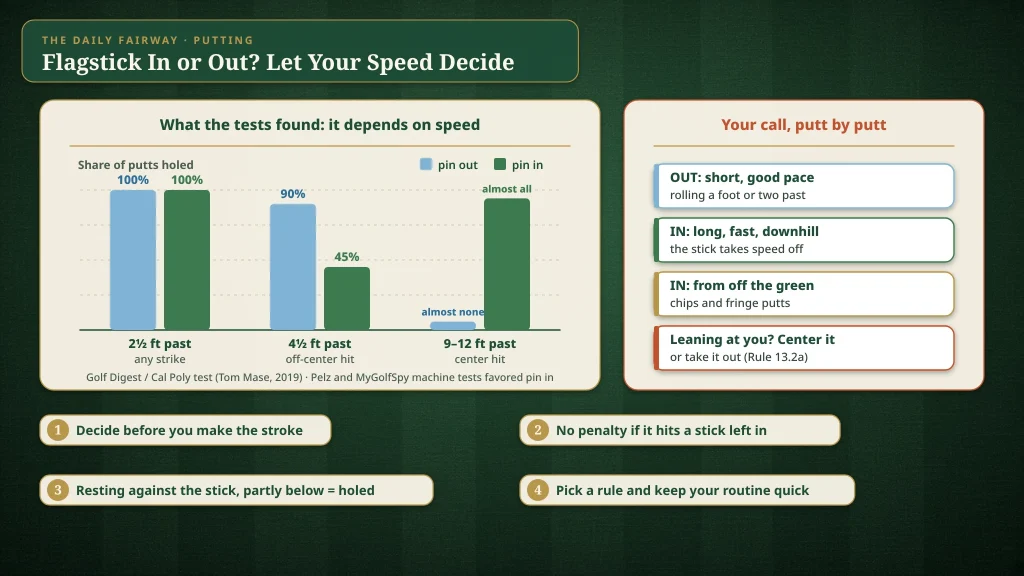
Since 2019 the Rules have let you putt with the flagstick in without penalty, and golfers still argue about whether it helps. The research doesn’t fully agree either. Dave Pelz’s machine tests, first run in 1990, and a later MyGolfSpy machine test both found that leaving the stick in holed more putts, because a fiberglass flagstick soaks up speed and lets gravity pull the ball down. A 2019 Golf Digest test by Cal Poly engineering professor Tom Mase found the opposite for putts that clip the stick off-center at a normal pace. The difference comes down to how fast the ball is rolling and where it hits the pin, so make the call shot by shot.
🛒 Gear that helps with this: PuttOut Pressure Putt Trainer — A compact target that only keeps putts hit at the right speed. Great for the ladder and lag drills.
How to do it
1. Know your options. Decide before you putt: leave the flagstick where it is, move it so it’s centered in the hole and leave it there, have it taken out, or have someone attend it. There’s no penalty if your ball hits a flagstick left in, and a ball that comes to rest against the stick counts as holed if any part of it is below the surface of the green. You can’t deliberately lean the stick to gain an advantage, and once the ball is rolling you can’t pull the stick out to change where it ends up.
2. Short putts at good pace: take it out. In Mase’s test, putts rolling about 2½ feet past the hole dropped every time, pin in or out. At 4½ feet past, putts that hit the stick off-center went in 90 percent of the time with the hole open but only 45 percent with the stick in (61 percent with the softer fiberglass stick). From close range, when your speed is under control, an open hole is the bigger target.
3. Long, fast or downhill putts: leave it in. Every test agrees the stick saves putts that are going way too fast. In Mase’s test, putts that would have rolled 9 to 12 feet past almost all missed with the hole open, while almost all that hit the center of the stick dropped. Even a glancing hit takes off enough speed to leave a shorter comeback putt, which helps prevent three-putts. The same logic makes pin-in a sensible default when you’re chipping or putting from off the green.
🛒 Many golfers practice this with Alignment Sticks (2-pack) — The cheapest, most useful practice tool in golf: check aim, ball position and gate drills.
4. Look at the stick before you decide. If it’s leaning toward you, center it or take it out; a stick leaning your way shrinks the gap for the ball. In a strong wind, a bending or rattling flagstick can be distracting, so pull it if it bothers you.
5. Pick a rule and stick with it. A simple one is out on short putts you expect to roll a foot or two past, in on long lags, downhillers and anything from off the green. Mase also had 36 elite college golfers hit 25-foot putts with the stick in and out, and they finished about two feet from the hole either way, so choose the option that keeps your routine calm and quick.
Practice plan: Over your next three rounds, use the rule above on every putt and note in your scorecard whether the stick was in or out and whether you holed it or how far the miss finished. On the practice green, hit ten lag putts from 30 to 40 feet and count how many finish inside three feet, so you know how often you’re really in pin-in territory.
Top picks for this tip
- 1
PuttOut Pressure Putt Trainer
Training Aids
A compact target that only keeps putts hit at the right speed. Great for the ladder and lag drills.
- 2
Alignment Sticks (2-pack)
Training Aids
The cheapest, most useful practice tool in golf: check aim, ball position and gate drills.
- 3
Odyssey White Hot Putter
Clubs
A classic soft-feel insert putter that’s helped countless golfers with distance control.
Watch it
TESTED: Flagstick In (vs) Flagstick Out? — MyGolfSpy
Sources & further reading
- Dave Pelz: Science proves you should leave flagstick in · GOLF.com
Pelz’s 1990 machine test from two feet at several speeds and slopes found more putts holed with the pin in, because a fiberglass flagstick absorbs the ball’s speed. - TESTED: Flagstick In or Flagstick Out? · MyGolfSpy
Machine-rolled putts at three speeds, two flagstick types, center and off-center hits: pin-in made more putts and left misses closer, least so with the stick leaning toward the golfer. - Take the Flagstick Out! · Golf Digest
Tom Mase’s Cal Poly test: at 4½ feet past, off-center hits went in 90% pin out vs 45% pin in (61% fiberglass); pin-in saved putts rolling 9 to 12 feet past. - Rule 13: Putting Greens · The R&A
Rule 13.2: decide before the stroke to leave the flagstick in (or centre it), remove it or have it attended; no penalty for hitting a flagstick left in; a ball resting against it with any part below the surface is holed.
FAQ
What is the "Flagstick In or Out? Let Your Speed Decide" golf tip about?
Since 2019 the Rules have let you putt with the flagstick in without penalty, and golfers still argue about whether it helps. The research doesn’t fully agree either. Dave Pelz’s machine tests, first run in 1990, and a later MyGolfSpy machine test both found that leaving the stick in holed more putts, because a fiberglass flagstick soaks up speed and lets gravity pull the ball down. A 2019 Golf Digest test by Cal Poly engineering professor Tom Mase found the opposite for putts that clip the stick off-center at a normal pace. The difference comes down to how fast the ball is rolling and where it hits the pin, so make the call shot by shot.
How do I put it into practice?
Know your options. Decide before you putt: leave the flagstick where it is, move it so it’s centered in the hole and leave it there, have it taken out, or have someone attend it. There’s no penalty if your ball hits a flagstick left in, and a ball that comes to rest against the stick counts as holed if any part of it is below the surface of the green. You can’t deliberately lean the stick to gain an advantage, and once the ball is rolling you can’t pull the stick out to change where it ends up.
What’s the key takeaway?
Practice plan: Over your next three rounds, use the rule above on every putt and note in your scorecard whether the stick was in or out and whether you holed it or how far the miss finished. On the practice green, hit ten lag putts from 30 to 40 feet and count how many finish inside three feet, so you know how often you’re really in pin-in territory.
Ready to practice this? Our top pick for this tip is the PuttOut Pressure Putt Trainer.
